What are the 3 types of muscle cells?
- Skeletal
- Cardiac
- Smooth
State the structure and function of skeletal muscle
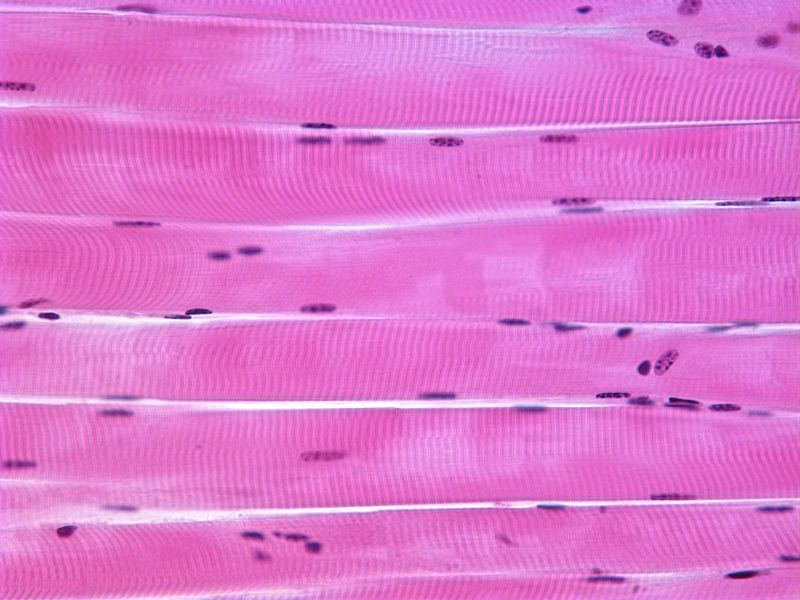
- Structure: striated muscle due to the ordered arrangement of the myofibrillar apparatus producing a characteristic banding pattern
- Function: permit movement through voluntary contractions
Describe the role of skeletal muscle in heat generation
- Approximately 80% of chemical energy is lost as heat as a by-product of muscle activity
- This inefficiency is used by the physiological process of shivering to raise core body temperature by the involuntary activation of skeletal muscle
Describe the numerical distribution of skeletal muscles in the body
- Approximately 640 skeletal muscles
- Most of which are present as bilateral pairs
The most common arrangement of skeletal muscle is for the fibres to run parallel to the force-generating axis.
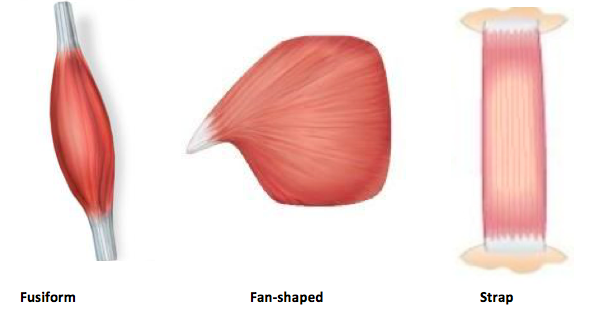
Identify the three types of parallel muscles
Describe the structure of strap muscles
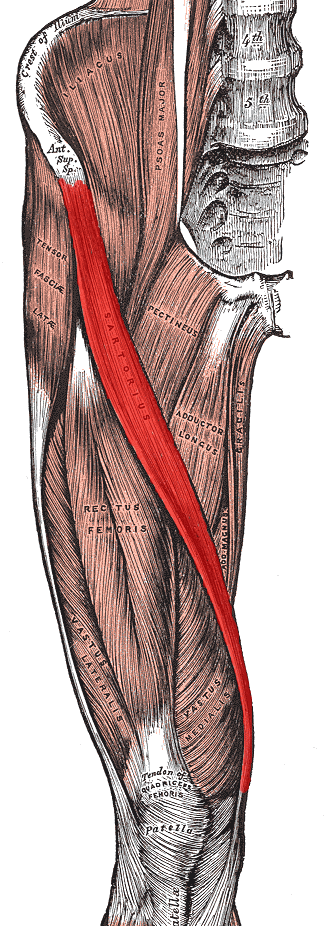
Strap muscles are shaped like a strap with the fibres running longitudinally, parallel to the direction of contraction e.g. sartorius
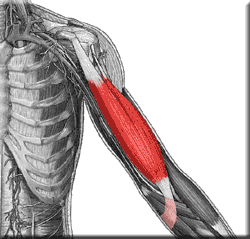
Describe the structure of fusiform muscles
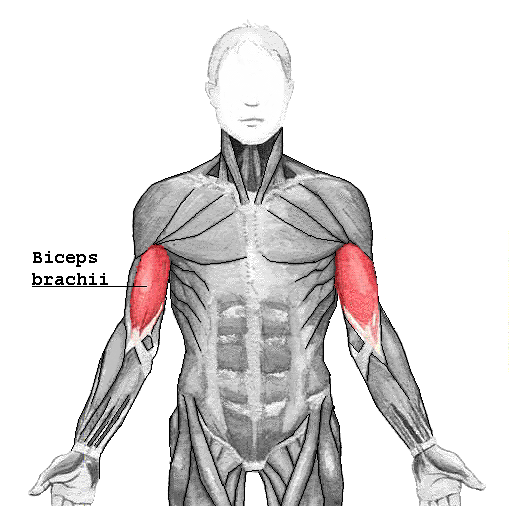
Fusiform muscles are cylindrical and wider in the centre while tapering off at the ends e.g. biceps brachii
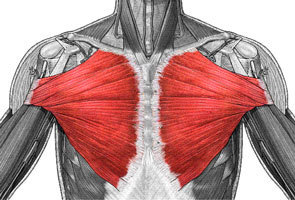
Describe the structure of fan-shaped muscles
Fan shaped muscles have fibres that converge at one end e.g. pectoralis major
What are pennate muscles?
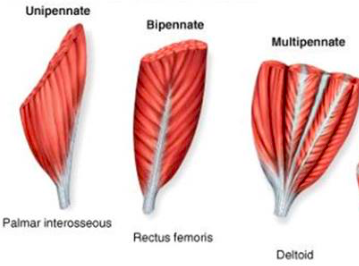
Pennate muscles are muscles which 1/more aponeuroses running through the muscle body from the tendon and fascicles which attach to these aponeuroses obliquely to the direction of movement
Identify and describe the different kinds of pennate muscles
- Unipennate where all the fascicles are on the same side as the tendon
- Bipennate where fascicles are on both sides of a central tendon
- Multipennate where a central tendon branches
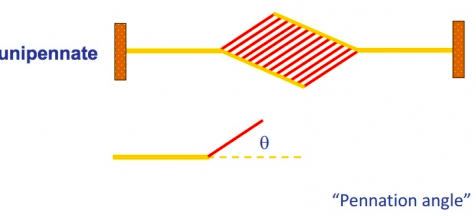
What is a pennation angle?
The pennation angle is the angle between a fascicle’s orientation and the tendon axis
What are circular muscles?
Circular muscles are muscles where fibres form concentric rings around a sphincter or opening by attaching to skin, ligaments and fascia of other muscles rather than to bone
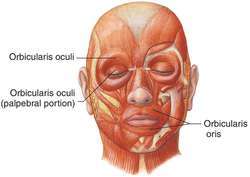
E.g. orbicularis oculi around the eye, orbicularis oris around the mouth
What are agonist and antagonist muscles?
- An agonist is the prime muscle(s) responsible for a particular movement
- An antagonist is the muscle(s) which opposes this movement
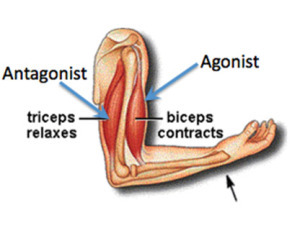
What are synergists?
Synergists are muscles which act to assist the prime mover as they cannot act alone to perform the movement e.g. brachioradialis and pronator teres in elbow flexion
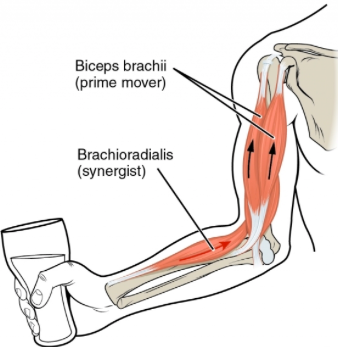
What are neutralisers?
Neutralisers are muscles which prevent the unwanted actions that an agonist can perform
E.g. rotator cuff muscles stabilise the glenohumeral joint whilst biceps, (whose long head acts to cause shoulder flexion) cause elbow flexion
What are fixators?
Fixators are muscles which act to hold a body part (proximal joint) immobile whilst another body part (distal joint) is moving
E.g. elbow flexion – fixators are the muscles that stabilise the scapula and those that stabilise the shoulder joint
Distinguish between neutraliser and fixator muscles
- Neutralisers prevent the unwanted actions of a muscle
- Fixators stabilise a joint
What is muscle contraction?
Muscle contraction refers to the active cycling of cross-bridges between the actin thin filaments and the myosin thick filaments within the sarcomeres
What is isotonic contraction?
Isotonic contraction is where the tension within the muscle remains constant and the length changes
Identify and describe the 2 types of isotonic contraction
- Concentric contraction: muscle shortens e.g. biceps during elbow flexion
- Eccentric contraction: muscle lengthens e.g. quadriceps during walking
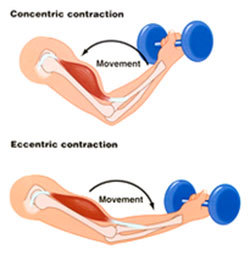
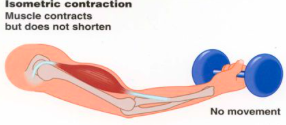
What is isometric contraction?
Isometric contractions is where the length of the muscle stays contant but tension is generated e.g. holding a weight in a fixed position, or trying to push a brick wall
What is passive stretch?
Passive stretch is the lengthening of the muscle muscle in a passive state i.e. not being stimulated to contract
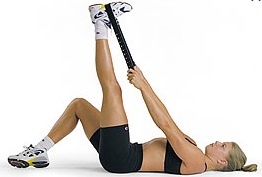
E.g. pull felt in the hamstrings whilst touching the toes
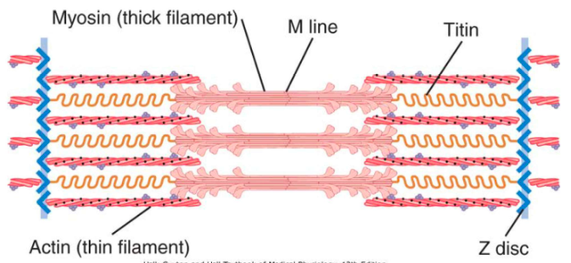
The protein titin is now known to be important in the contraction of striated muscle tissues.
What is its role in passive stretch?
- Titin connects the Z line to the M line in the sarcomere and contributes to force transmission at the Z line and resting tension in the I band region
- Titin limits the range of motion of the sarcomere in tension, thus contributing to the passive stiffness of muscle
Briefly, describe the role of motor neurons in the skeletal muscle
Each skeletal muscle is supplied by a number of motor neurons which stimulate the muscle fibres to contract


-
S1) Bones and Joints20
-
S1) Skeletal Muscle Morphology, Structure & Mechanics45
-
S1) Embryology of the Musculoskeletal System20
-
S2) Dermatomes, Myotomes and Segmental Innervation of the Limbs20
-
S2) Vertebral Column45
-
S3) Lumbar & Sacral Plexus31
-
S3) The Hip68
-
S4) The Thigh77
-
S4) The Knee29
-
S4) The Leg78
-
S5) The Ankle21
-
S5) The Foot29
-
S5) Walking & Gaits13
-
S6) Cervical and Thoracic Spine40
-
S6) Pectoral Region, Axilla and Brachial Plexus60
-
S7) The Shoulder85
-
S7) The Upper Arm45
-
S8) The Elbow24
-
S8) The Forearm75
-
S9) Classification of Fractures20
-
S9) The Wrist33
-
S9) The Hand59
-
S10) Nerve Injuries of the Lower Limb26
-
Clinical Conditions75


